
The Cactus That Blooms in Winter (and Lives for Decades)
How to water, place and time your Christmas cactus so it covers itself in flowers every December, and how to tell it apart from its Thanksgiving and Easter cousins.
Some houseplants are bought for one season and forgotten. The Christmas cactus is the opposite. In many families it is the plant that grandma had on the windowsill, and the same plant (or a cutting of it) is still flowering 30 or 40 years later. In Germany it is called Weihnachtskaktus or Gliederkaktus, and it is one of the most loved winter-flowering plants in Europe.
It is also one of the most misunderstood. People treat it like a desert cactus, give it full sun and almost no water, and then wonder why it never blooms. Or they move it around the house while it is full of buds, and all the buds fall off overnight.
In this guide: what this plant really is, how to recognise the three "holiday cacti", the right light, water and temperature, the simple secret to getting flowers every year, why buds drop, and how to make new plants from cuttings.
Not a Desert Cactus: A Plant From the Rainforest
The Christmas cactus belongs to the genus Schlumbergera and comes from the coastal mountains of south-eastern Brazil. It does not grow in sand under burning sun. In nature it lives on tree branches and mossy rocks in humid, shady forests, a bit like an orchid. Plants that grow on other plants like this are called epiphytes.
That origin explains almost everything about its care: it likes bright but filtered light, more water than a normal cactus, a light and airy soil, and cool, long nights in autumn.
Another surprise: it has no real leaves. The flat green segments that look like leaves are actually flattened stems, called phylloclades. They do the job of leaves and store a little water.

The flowers appear at the tips of the flat stem segments, often several from the same tip.
Christmas, Thanksgiving or Easter Cactus? How to Tell
Most plants sold as "Christmas cactus" in shops are actually Thanksgiving cacti, because they bloom earlier and look great on the shelf in November. Care is almost the same, but it helps to know which one you have.
| Thanksgiving cactus | Christmas cactus | Easter cactus | |
|---|---|---|---|
| Botanical name | Schlumbergera truncata | Schlumbergera x buckleyi | Hatiora gaertneri |
| Stem segments | Pointed, "claw-like" teeth on the edges | Smooth, rounded edges | Rounded, with small bristles |
| Pollen (anthers) | Yellow | Purplish-brown | – |
| Blooms | Late autumn, about a month before Christmas | Around Christmas and winter | Spring |
Light and Temperature: The Right Spot
Light
Give it bright light, ideally near an east or west window, or a little back from a south window. A couple of hours of soft winter sun is welcome. Strong summer midday sun behind glass, on the other hand, can turn the segments red or yellow and stress the plant.
Temperature
Normal room temperatures are fine for most of the year. In autumn, cool nights are what trigger the flowers (more on that below). Once buds have formed, avoid sudden changes: a radiator right under the pot or an icy draught from a window both cause trouble.
Summer holiday outside
From late May to September the plant enjoys a shady, sheltered spot on a balcony or under a tree. Bring it back indoors before nights get colder than about 10 °C.
Watering and Feeding
Because it is a forest plant, the Christmas cactus needs more water than a desert cactus, but it hates wet feet. The simple rule:
- Water thoroughly when the top half of the soil feels dry.
- Let the extra water run out, then empty the saucer after about 15 minutes. Never leave the pot standing in water.
- Use room-temperature water. If your tap water is very hard, rainwater or filtered water is kinder.
- When buds are forming and while it flowers, keep the soil evenly moist so the buds don't drop.
- After flowering, water a little less for about a month to let the plant rest.
Feeding: from spring to late summer, a normal houseplant fertiliser at half strength every 2 to 4 weeks is enough. Stop feeding in autumn when you want buds to form.
The Secret to Flowers Every Year
This is what most people miss. Like the poinsettia, the Christmas cactus is a short-day plant. It only sets flower buds when nights become long and cool. If it sits all autumn in a warm living room with the lights on until midnight, it may never bloom.

Cool, long nights in autumn = a plant covered in flowers in December.
Why Are the Buds Falling Off?
Bud drop is the number one complaint, and it is almost always caused by stress at the wrong moment.
| What happened | Why it causes bud drop | What to do |
|---|---|---|
| Plant moved or turned while in bud | The buds orient themselves to the light; a sudden change confuses them | Pick its winter spot before buds form and leave it there |
| Cold draught or open window | Sudden temperature drop | Keep it away from doors and windows you open for airing |
| Next to a radiator | Heat and very dry air | Move it to a cooler, brighter spot |
| Soil dried out completely | The plant saves water by dropping buds | Keep soil evenly moist while in bud |
| Soil soaking wet for days | Roots begin to rot | Empty the saucer, let the top dry a little |
Is It Safe for Cats and Dogs?
Good news for pet owners: the Christmas cactus is listed as non-toxic to cats and dogs by the ASPCA. That makes it one of the safest Christmas plants you can have, unlike lilies (very dangerous for cats) or poinsettias (irritating sap).
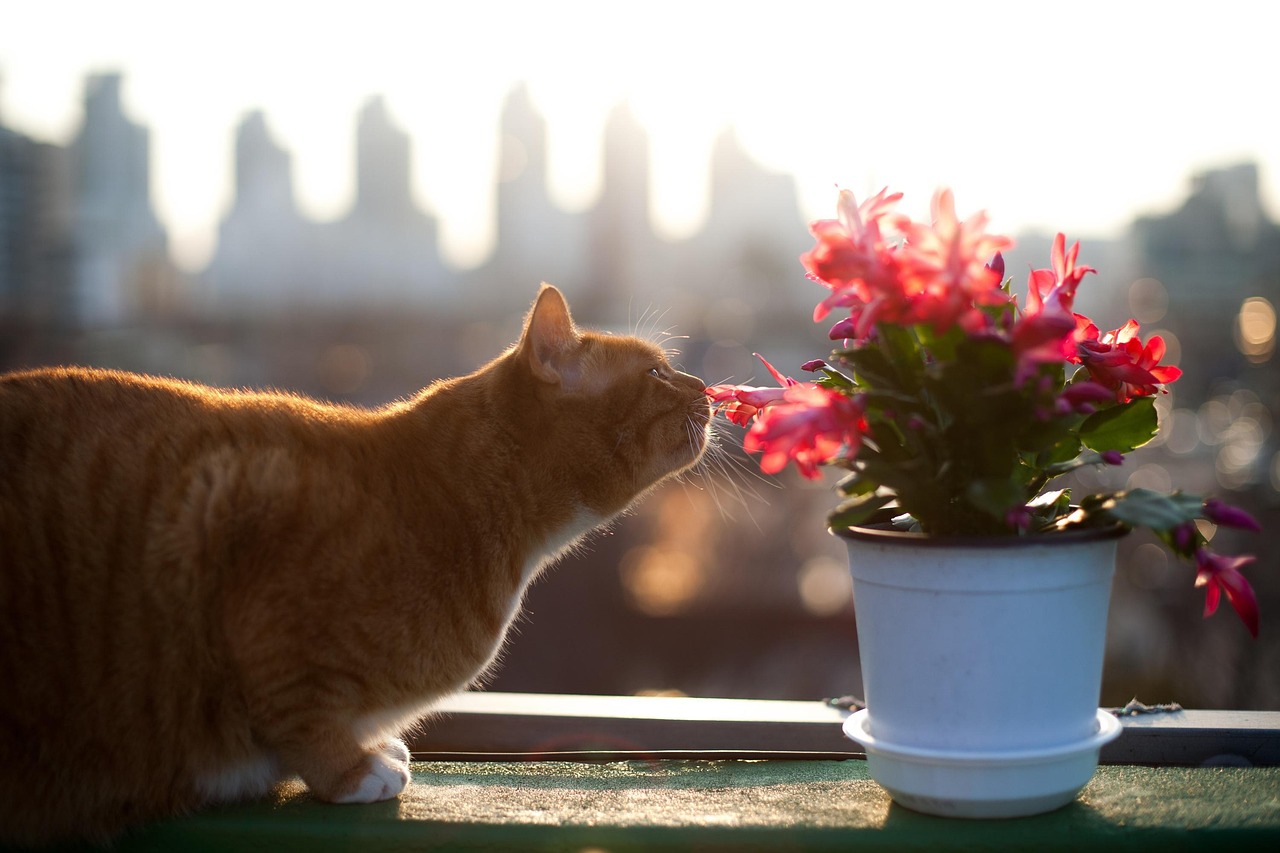
Curious cats are common around holiday cacti. A nibble is not dangerous, but a big meal can upset the stomach.
How to Make New Plants From Cuttings
This is the easiest plant to share. A cutting from a family plant makes a lovely gift, and it roots almost every time.
- When: late spring or early summer, after flowering, when the plant is growing.
- Cut: twist or cut off a piece with 2 or 3 segments.
- Dry: leave it on a plate for a few hours up to a day, so the cut end can dry and seal.
- Plant: push the bottom segment upright into slightly moist potting mix with perlite, just deep enough to stand. Several cuttings in one pot give a fuller plant faster.
- Wait: keep it in bright, indirect light and water lightly. After 3 to 6 weeks, new little segments at the top show that roots have formed.
Christmas Cactus Quick Care Card
- Light: bright, no harsh summer midday sun
- Water: when the top half of the soil is dry, empty the saucer
- Soil: 3 parts potting soil + 1 part perlite or coarse sand
- Feeding: spring to late summer, half strength every 2 to 4 weeks
- Flowers: cool nights (10 to 13 °C) or 13 to 14 h darkness from late September
- In bud: don't move it, no draughts, keep soil evenly moist
- Pets: non-toxic for cats and dogs (ASPCA)
Final Thoughts
The Christmas cactus asks for very little: a bright spot, sensible watering, and a few weeks of long, cool autumn nights. Give it that, leave it alone when it is full of buds, and it will reward you with a cascade of flowers every winter, possibly for the rest of your life. And when it gets big, take a few cuttings. Someone in your family will be very happy to receive one.
Love Nature and Gardening? There's Much More Coming
If you are into nature, gardening, and agriculture, keep exploring our articles. We cover everything about it, in Europe and around the world, and there is much more coming soon. Follow our Facebook Page and join the conversation in our Facebook Group.
Comments
Post a Comment