
The Christmas Star That Doesn't Have to Die in January
How to choose, water and place your poinsettia so it stays red all winter, and how to make it change colour again next year.
Every November the supermarkets, garden centres and Christmas markets fill up with poinsettias. In Germany they are called Weihnachtsstern (Christmas star), and they are one of the best-selling pot plants of the whole year. And every January, a huge number of them end up in the bin, dropping leaves and looking sad.
The good news: most poinsettias don't die because they are difficult. They die because of three simple mistakes: cold, too much water, and a bad spot.
In this guide: how to pick a healthy plant, how to bring it home safely, the right light, temperature and watering, why the leaves fall, the truth about toxicity, and the step-by-step method to make it turn red again next Christmas.
A Mexican Plant With a Winter Job
The poinsettia (Euphorbia pulcherrima) comes from the dry forests of southern Mexico and Central America, where it grows as a shrub up to 3 or 4 metres tall. The Aztecs called it cuetlaxochitl and used it for dye and decoration. Its English name comes from Joel Roberts Poinsett, the first US ambassador to Mexico, who sent cuttings home in the 1820s.
Here is the part most people don't know: the red "petals" are not flowers. They are coloured leaves called bracts. The real flowers are the tiny yellow-green buttons in the middle, called cyathia.

The red parts are bracts. The real flowers are the small yellow buds in the centre.
How to Choose a Healthy Poinsettia
A good plant starts in the shop. Before you buy, check these points:
Bringing It Home: The First Danger
Poinsettias are tropical. Just a few minutes in cold air can be enough to make them drop leaves days later. Temperatures below about 10 °C are already a problem, and frost kills them quickly.
- Always ask for the plant to be fully wrapped in paper or a plastic sleeve, top included.
- Make the poinsettia your last stop when shopping, so it doesn't wait in a cold car.
- Unwrap it as soon as you get home. Leaving it in the sleeve for days can cause leaf drop too.
Light and Temperature: Finding the Right Spot
Light
Give it bright light, but not hot midday sun pressed against the glass. A spot a little back from a south, east or west window is ideal. In a dark corner the plant will slowly drop its leaves.
Temperature
The ideal room temperature is about 18 to 22 °C during the day and not below about 15 °C at night. Slightly cooler rooms actually make the bracts last longer.
Places to avoid
- Directly above or next to a radiator or fireplace (too hot and dry).
- Near a door that opens often, or a window you tilt open for Lüften (airing). The cold draught does real damage.
- Touching a cold window pane at night.
Watering: Where Most Poinsettias Die
Overwatering kills more poinsettias than anything else. The roots hate standing in wet soil, but the plant also drops leaves if it dries out completely. Here is the simple method:
- Feel the soil with your finger. Water only when the top 1 to 2 cm feel dry.
- Remove the decorative foil or cover pot first, or make holes in the foil.
- Water with room-temperature water until a little runs out of the bottom. Cold tap water can shock the roots.
- After 10 to 15 minutes, empty the saucer. Never let it stand in water.
Many growers prefer watering from below: put the pot in a bowl of lukewarm water for about 10 minutes, then let it drain well.
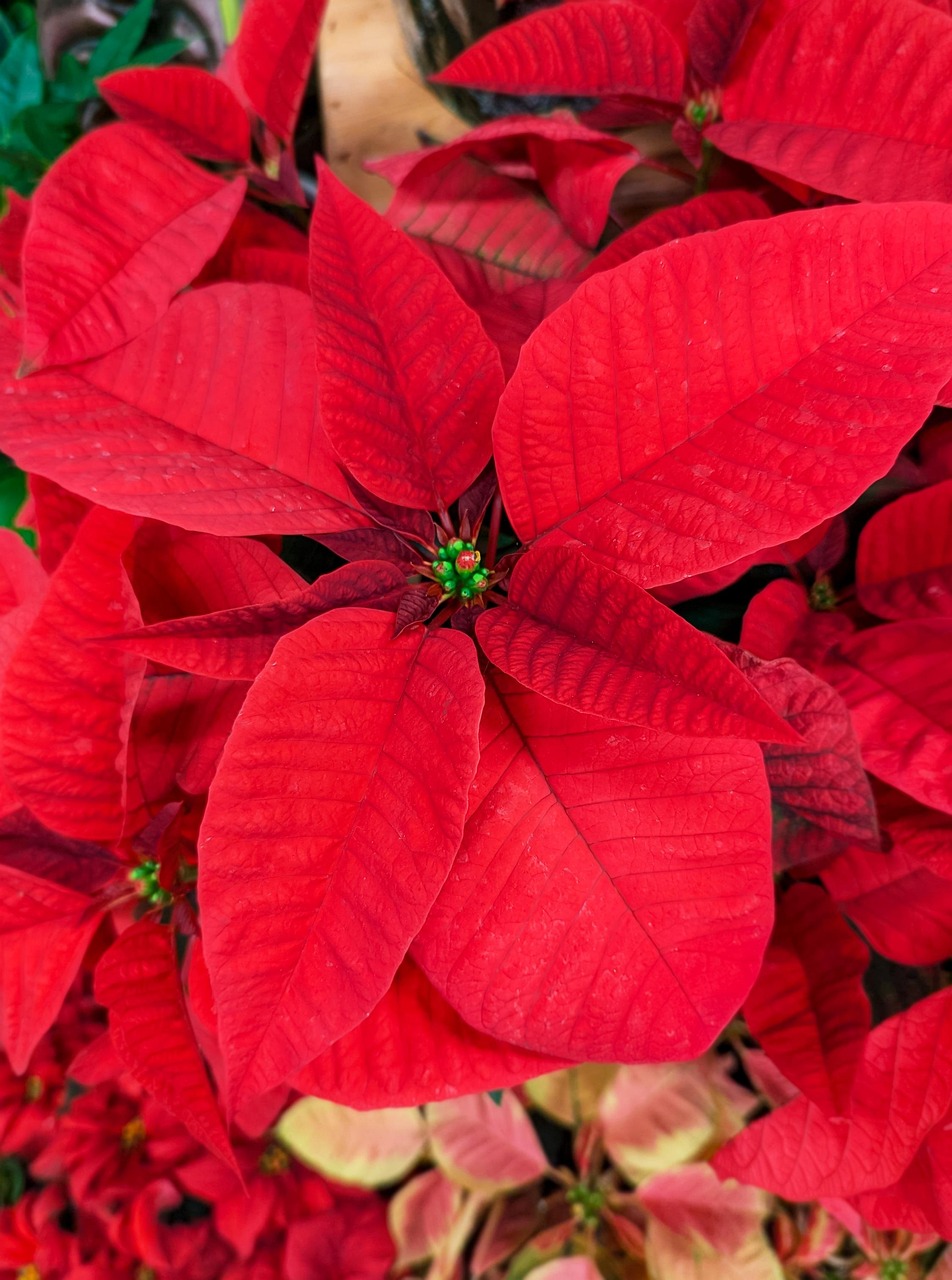
A healthy poinsettia has firm, bright bracts and green leaves down to the soil.
Why Are the Leaves Falling? Quick Diagnosis
| What you see | Most likely cause | What to do |
|---|---|---|
| Leaves drop suddenly, all at once | Cold shock or draught | Move to a warm, draught-free spot |
| Yellow lower leaves, wet soil | Too much water | Let it dry out, empty the saucer |
| Whole plant wilting, dry soil | Too little water | Water from below, then drain |
| Wilting with wet soil | Root rot | Check roots, repot in fresh soil if possible |
| Leaves dropping slowly over weeks | Not enough light | Move closer to a bright window |
| Brown, dry edges on bracts | Air too dry or too hot | Move away from the radiator |
Is the Poinsettia Poisonous? The Honest Answer
The poinsettia has a reputation as a deadly plant, but that is a myth. It belongs to the spurge family and has a milky sap that can irritate skin, eyes, mouth and stomach. In pets and children, eating it usually causes mild symptoms like drooling, vomiting or an upset stomach, not serious poisoning.
After Christmas: Keeping It Alive All Year
Many people throw the plant away in January, but a poinsettia can live for many years as a houseplant. Here is the yearly calendar:
January to March
Keep caring for it as normal. The bracts slowly fade. Water a little less.
April
Cut the stems back to about 15 cm above the soil (wear gloves because of the sap). Keep watering lightly.
May to June
When new growth appears, repot it into a slightly bigger pot with fresh potting soil and start feeding every 2 to 3 weeks with a normal houseplant fertiliser. After the last frost (in Germany, usually after the "Eisheiligen" in mid-May), it can spend summer outside in a sheltered, half-shaded spot.
July to August
Pinch off the tips of new shoots once or twice to make the plant bushy. Stop pinching by mid-August.
September
Bring it indoors before nights fall below about 12 °C.
How to Make It Turn Red Again
This is the part everyone asks about. To change colour, the poinsettia needs long, completely dark nights for about 8 to 10 weeks, just like in its natural home.

With 8 to 10 weeks of long nights, the green leaves at the top turn red again.
Not Only Red: Popular Poinsettia Colours
- Classic red: still the bestseller and the most traditional.
- White and cream: elegant, popular for modern and Scandinavian-style decoration.
- Pink and salmon: softer colours, often in mixed arrangements.
- Marbled and speckled: bracts with two colours, like pink with cream edges.
- Mini poinsettias: small pots for tables and windowsills, but they dry out faster, so check them more often.
Poinsettia Quick Care Card
- Light: bright, no hot direct midday sun
- Temperature: 18 to 22 °C, never below 15 °C
- Water: when the top 1 to 2 cm are dry, never let it stand in water
- Avoid: cold draughts, radiators, open windows
- Toxicity: irritating sap, keep away from pets and children
- Pruning: April, down to about 15 cm
- Rebloom: 14 hours of darkness nightly from early October
Final Thoughts
A poinsettia is not a "disposable" Christmas decoration. Bring it home wrapped, keep it warm and bright, water it only when it needs it, and it will easily stay beautiful until spring. And if you feel like a small challenge, try the darkness method next October. Seeing your own plant turn red again in December is one of the nicest little wins in indoor gardening.
Love Nature and Gardening? There's Much More Coming
If you are into nature, gardening, and agriculture, keep exploring our articles. We cover everything about it, in Europe and around the world, and there is much more coming soon. Follow our Facebook Page and join the conversation in our Facebook Group.
Comments
Post a Comment